Singing Dragon Complete Catalogue – Spring/Summer 2013

Featuring all of our titles, including books on Chinese medicine, qigong, martial arts and complementary therapies, the Singing Dragon catalogue has something for everyone. Feel free to browse, share and email the catalogue to anyone you think might be interested. Click on the catalogue to view full-screen. You can find out more information and order the books by clicking on the titles.

If you would like any physical copies of the catalogue please send an email to post@intl.singingdragon.com

Raise awareness of Ehlers-Danlos Syndrome this May


EDS awarenessMay is Ehlers-Danlos Syndrome (EDS) Awareness Month, raising awareness of this multi-systemic and complex connective tissue disorder, and supporting those who live with this invisible condition.

As awareness and understanding of EDS are central to early diagnosis and management of symptoms, take the time to learn about the condition, and simple steps that can help the many people who live with it.

Learn more about EDS (especially type III – Hypermobility Syndrome) with these interviews and resources, and more:

Books:

Interviews:

Organisations:

See also:

© 2013 Singing Dragon blog. All Rights Reserved

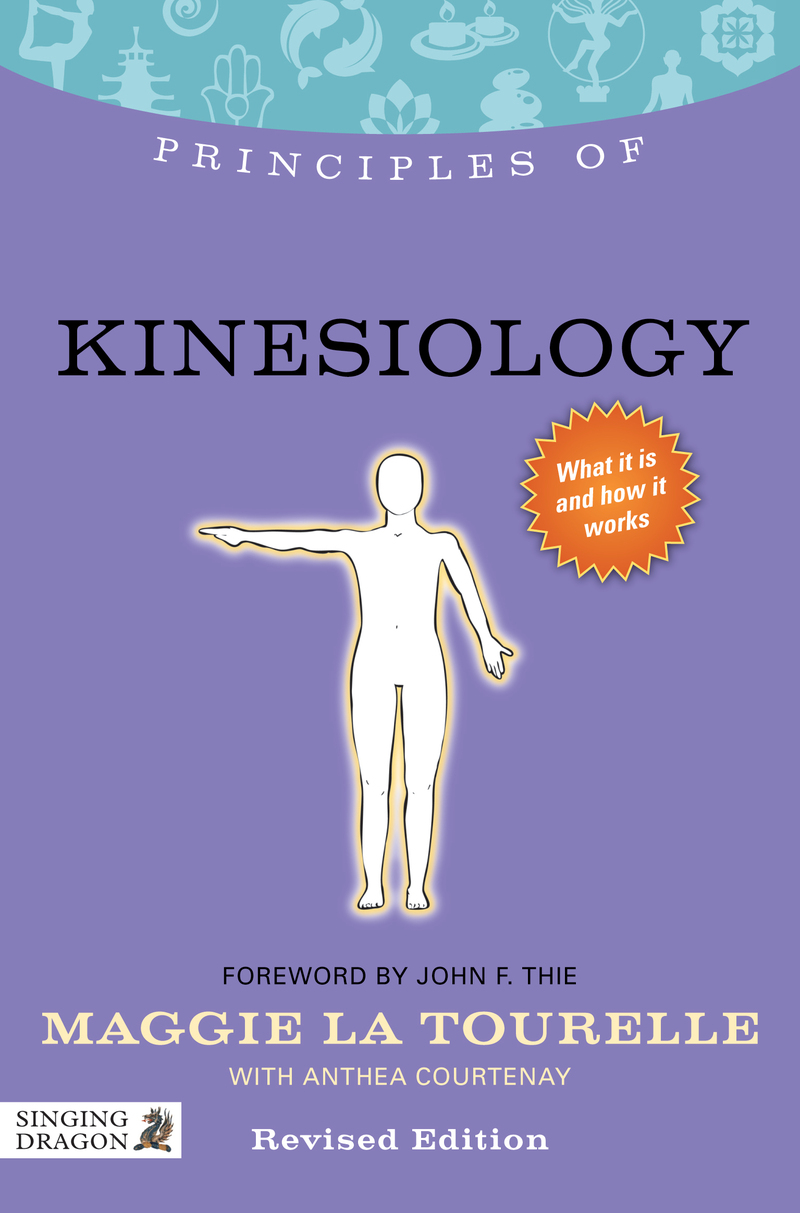
The Development of Kinesiology – extract from Principles of Kinesiology by Maggie La Tourelle with Anthea Courtenay

La-Tourelle_Principles-of-K_978-1-84819-149-5_colourjpg-webIn this extract, the authors describe the early development of Kinesiology, and the unexpected discoveries which informed the basis of many branches of the practice. They also look at how Kinesiology fits within the idea of truly holistic medicine, showing how it can bring change and restore balance in people’s lives.

Click here to read the extract

Praise for the first edition of Principles of Kinesiology:

“A well-crafted book, ideal for newcomers to the subject, whether lay or professional…an accurate and balanced guide to this fast-growing area of healing.”

– Leon Chaitow ND, DO, MRO, naturopath, osteopath and acupuncturist, and Editor-in-Chief of the Journal of Bodywork and Movement Therapies

“A much-needed book…to get help with your pain, stress and improve your performance with energy balance and muscle facilitation.”

– John F. Thie DC, founder and author of Touch for Health

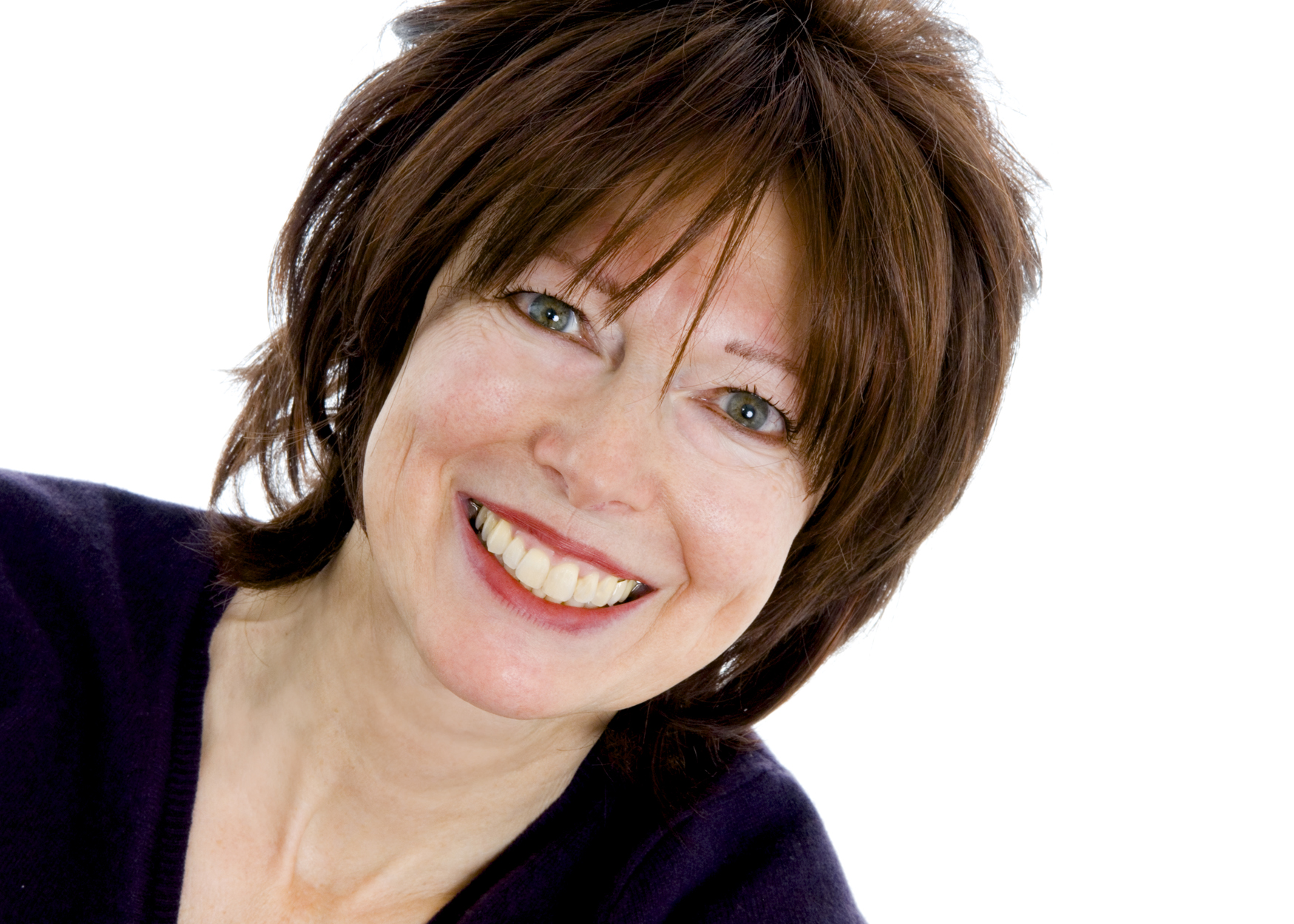
Maggie La Tourelle has worked in the field of holistic healthcare for thirty years as a practitioner, teacher and writer integrating kinesiology, counselling, psychotherapy and NLP. She is an honorary member of The Kinesiology Federation, and a member of The Association for Therapeutic Healers, The British Association for Counselling and Psychotherapy, The Scientific and Medical Network and the Guild of Health Writers. She lives in London, UK.

Anthea Courtenay is a freelance writer, journalist and translator based in London.

Understanding and treating the complex chronic patient – an interview with Isobel Knight

Isobel KnightWhat makes treating the chronic complex  patient so difficult? Do you think there is still a lack of understanding about how best to approach this?

I think that practitioners are very scared by complex chronic conditions and can become very overwhelmed. I’ve had so many medical professionals dismiss me because they really didn’t understand what the problem was. Treatment of chronic complex conditions really does require a multi-disciplinary team of people and medical experts, as well as an overarching approach to treatment plans. This can all be overwhelming for one person.

Conditions become chronic and complex over the years. There’s often a long delay in diagnosis (research by the Hypermobility Syndrome Association in the UK suggests that diagnoses can take about 10 years). As an individual gets older, he or she will gather more problems, which makes treatment even more difficult, relating to more bodily systems. If the condition is intercepted younger, these can all be addressed and hopefully better controlled.

How has being an individual with EDSIII (Ehlers-Danlos Syndrome – Type 3, Hypermobility) influenced the way you treat people in your clinic?

Based on what I’ve experienced, I can certainly spot the condition very quickly in people who haven’t had a diagnosis. Although I can’t officially diagnose, if the symptoms are there, I can get them sent to their GP for a referral to an expert rheumatologist. So in this way it’s really helped some people. I also know what ongoing management they are often going to require, so I can both refer them on to practitioners that I know, and support them with Bowen Therapy in the areas that I know they will need help with.

I’m never overwhelmed by what patients say, and I always believe them. And that helps a lot.

Why did you choose the autoethnographic approach in writing your new book?

That was inspired by an author I quote in the book, who wrote about life with a kidney condition and eventually turned it into a PhD thesis. I thought it was a really good way of framing the book. It uses my story as a basis, but also weaves in the stories of others, to ensure that it’s socially representative of that culture group. But also, this is a personal story. I include some quite personal details, and I hope that this makes it much more accessible to read, not a dry textbook. It really says how the patient feels, from my point of view and from the points of view of others.
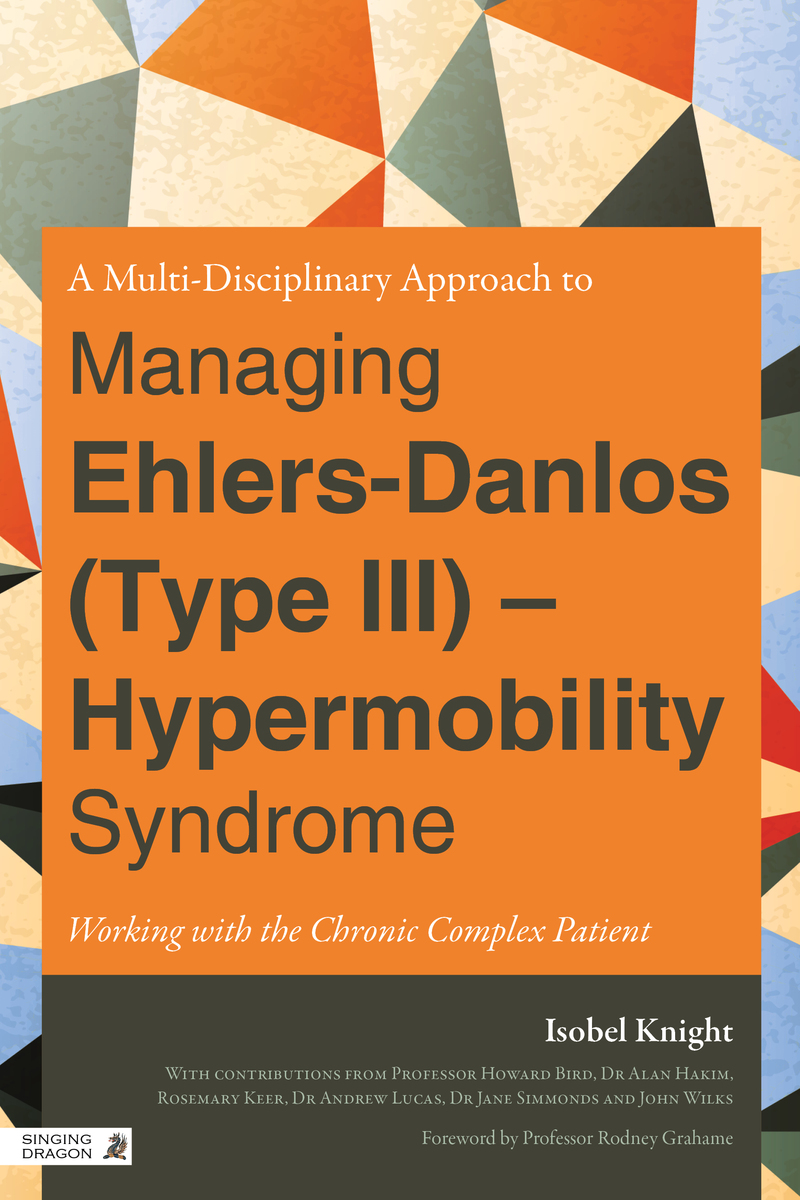
Book cover: A Multi-Disciplinary Approach to Managing Ehlers-Danlos (Type III) - Hypermobility SyndromeIn the book, you go into quite a lot of depth on the psychology involved both in having a chronic complex condition and in treatment. Do you think that the importance of this area is underestimated?

Yes. I was actually really surprised how large the psychological section of the book ended up being. There are so many layers to it, trust being a very important one. The issue of trust is so important for any medical professional dealing with a chronic complex patient. Personally, I had been consistently told by a range of professionals that the pain I was experiencing was psychosomatic, and that there was nothing wrong with me. I think that most patients have years of that to contend with. In so many cases these conditions involve a legacies of problems that haven’t been fully handled since a young age. Behaviours change because of pain. That really has an impact on people. They get angry, they get depressed, they get anxious.

I’ve also included a section for the patient on managing chronic pain, cognitive behavioural therapy, and other psychological aids such as goal-setting, pacing, ways of communicating and dealing with doctors.

Medical professionals also need support psychologically in dealing with the complex chronic patient because, as mentioned, treatment can be very overwhelming for them, and quite emotionally draining. If one of your patients comes back every week with little improvement to their pain, it can be emotionally difficult as a therapist to make a positive spin on it and focus on treatment.

Social media seems to be a really supportive, positive force for the treatment and understanding of these conditions. How do you see this developing in future?

I think that because some patients with this condition can become quite disabled, and socially isolated, Facebook, for example, can be a real lifeline for them. It’s a way for them to get mutual support, to learn more about the condition, to realise they’re not alone in their experience. I’ve been staggered by the response to my Facebook page, and how it’s being used internationally to provide support and share information on this subject (but never any medical advice).

How do you hope this book will help professionals working with, and patients with the syndrome?

I hope that the patients will be able to see that there has been, in my story, quite a positive improvement due to the level of care I’ve had, and the experts I’ve managed to have access to. Physiotherapy has been essential in this. I’d like to offer patients hope but also the reality that this is a genetically inherited condition, which is about management, not cure. I hope that the book provides not only treatment information, but validation – they can take the book to their doctors to show them what’s going on. It’s as up to the minute as up to the minute can be in terms of medical research and practice.

In terms of the medical professionals, I hope that they can understand the full impact of a multi-systemic chronic complex condition, what it means to have bodily systems not working very well, and the impact that this has psychologically, physically and socially. I hope this helps them to develop a bit of a more empathetic approach.

I’m incredibly lucky to have been able to have 6 real experts in each field contributing to the book. This means that they’ve been really able to bring the book up to date with the latest research on treatment and medical management of the condition. That’s a real privilege.

© 2013 Singing Dragon blog. All Rights Reserved
First steps in promoting hair regrowth, for anyone affected by Alopecia and other hair-loss problems – with Vera Peiffer

Vera PeifferWhen your hair is falling out, you are not just having a problem with your hair, but also something else in your body, no matter whether you have other symptoms or not. As I’m explaining in my book Regrowing Hair Naturally, there is a reason why your hair is falling out. This reason is some form of toxicity.


Water and hair loss

Toxicity in your body makes your body too acidic. While some acidity is very important for body processes to function correctly, over-acidity is a problem and can lead to hair loss. If you then also don’t drink any water during the day, the acidity stays in the body undiluted and this is where damage occurs.

If you are worried about your hair at the moment, it would obviously be important to find out which toxins are causing acidity in your body, but even if you don’t want to do this, at the very least start drinking good quality water. Increase your water intake every few days from 1 glass a day to 8 large glasses a day (approximately 2 litres a day). This helps dilute the acid in your body, no matter what has been causing the acid in the first place.
Drinking water is the first phase of detoxing. The second phase would be to take particular supplements (these are different for each person) which bind with the toxins and then take them safely out of the body. A hair sample test can establish exactly which supplements your body needs to carry out this conjugation phase of detox.

When you drink water, make sure the water is good quality. Filter it with a charcoal filter (Brita or similar) or have a water filter installed under your sink. If your water supply is fluoridised, I would suggest to drink bottled water as fluoride is not a great substance to have in your body. Don’t drink unfiltered tap water, no matter what your water company tells you. Chlorine in water needs to be filtered out, and your charcoal filter will do that for you.

Wheat and hair loss

Over 80% of my clients who have my hair/nail sample tests done have a problem with wheat. Some of them have a problem with all grains (rye, barley, oats etc).

Have a think about what you are eating for a typical breakfast, lunch and dinner. If your diet consists of muesli, sandwiches, pizza and pasta, this will have a major negative impact on your hair, even if you don’t have a wheat intolerance. What you need to eat is a little meat, plenty of vegetables and some carbs such as rice or potatoes. I know that this is inconvenient, especially for breakfast, but you are actually better off with bacon and eggs or an omlette for breakfast than with a muesli if you want to help your hair.

Foods you need to avoid are bread, pasta, pizza, biscuits, cakes, pasties and anything else that is made from wheat or gluten-free wheat. It is not enough if you change to gluten-free wheat as many people are not just intolerant to the gluten in the wheat but also to the rest of the grain.

Frequently Asked Questions: 

Water: 

Can’t I have juice instead of water?

Juice has a lot of sugar in it which makes the body acidic, and too much acidity is bad for your hair. Drinking juice also dehydrates you. There is really no replacement for water.

I find it hard to drink water. If I do, I have to run to the loo too often

Start with drinking sips of water throughout the day. If you need to pee a lot it means that you are completely dehydrated and / or that you are drinking too much too quickly.

Wheat: 

I find it very hard not to eat pasta, bread and cakes. Do I really have to give them up for my hair to grow better?

I know it’s hard to give up wheat. Wheat is actually quite addictive, but if you want your hair back, you will need to at least drastically reduce your wheat intake. Wheat and other grains can actually stop the body from detoxing because they produce mucus in the body.

Is it OK to have glutenfree bread instead of normal bread?

Yes, gluten free is much better, but even that type of bread does not contain the nutrients your hair needs to grow, so make sure you have proteins and vegetables most of the time.

 For more tips on hair regrowth, visit Vera Peiffer’s website: http://www.hairgrowthuk.co.uk/blog/ and read Regrowing Hair Naturally


More from Vera Peiffer

Principles of Hypnotherapy
What it is, how it works, and what it can do for you 

Vera Peiffer

This is an authoritative introduction to hypnotherapy explaining what it is, how it works, what its origins are, what to expect when being treated and how to find a reputable hypnotherapist. It also clarifies how hypnotherapy can help with mental and emotional trauma, anxiety, depression, phobias, confidence problems and unwanted habits.

Click here to buy the book

© 2013 Singing Dragon blog. All Rights Reserved.

Request a copy of the UK Singing Dragon Complete Catalogue

Cover of the Singing Dragon UK Complete CatalogueMake sure not to miss Singing Dragon’s latest UK Complete Catalogue. If you have not yet received a copy, please sign up for our mailing list and we’ll send a free one out to you ASAP.

Readers in the UK and Europe who request a copy of the catalogue before February 15th, 2013 will also receive a voucher for a 15% discount on the entire Singing Dragon list of books, with free postage and packing.

Take advantage of this opportunity to find new, forthcoming and classic books on Chinese Medicine, Holistic Health, Taiji, Qigong, Herbal Medicine, Yoga, Spirituality and more. Also, sample health-promoting recipes with The Functional Nutrition Cookbook, and Make Yourself Better with Philip Weeks’ books. Delve into the history of Ayurvedic Medicine and the Mudras of India, and discover the Five Levels of Taijiquan, Daoist Nei Gong and Chinese Medical Qigong.

To request your copy of our Complete Catalogue, please click here. To receive your 15% discount voucher, please be sure to click the checkbox for “Singing Dragon” under area of interest or else mention this offer in the “any further comments” section.

If you have previously received a copy of the catalogue, and would like to take advantage of the 15% discount, please feel free to request a voucher via email at post@intl.singingdragon.com.

Singing Dragon attends Building Bridges of Integration conference in Chantilly, Virginia

Singing Dragon was happy to return to the Building Bridges of Integration for Traditional Chinese Medicine Conference in Chantilly, Virginia, from October 18-21. The warm temperatures made it feel like spring but with the beautiful foliage in full swing, fall easily gave itself away. The changing leaves were the perfect backdrop to this year’s conference theme: Transformation: Consciousness and Quantum Medicine.

Our table was busy with attendees who were happy to see Singing Dragon’s newest titles. These included I Ching Acupuncture by David Twicken, Acupuncture for New Practitioners by John Hamwee, Fire Dragon Meridian Qigong by Master Zhongxian Wu and Dr. Karin Taylor Wu and Illustrated Chinese Moxibustion Techniques and Methods by Professor Chang Xiaorong, Professor Hong Jing and Professor Yi Shouxiang. By the end of our first day we had even sold out of Frog’s Breathtaking Speech by Michael Chissick!

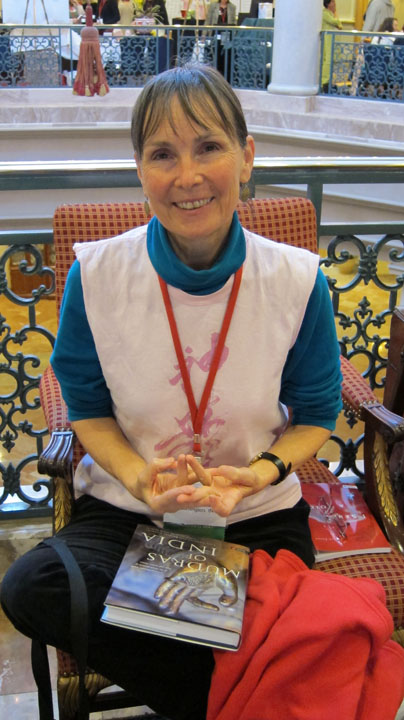
Attendees enjoyed discovering their Chinese animal and happily donned our pins inspired by Chungliang Al Huang’s The Chinese Book of Animal Powers. Attendees also stopped by to pick up our new title Mudras of India by Cain and Revital Carroll. Here Kate practices her Mandala Mudra.

During the conference we encouraged attendees to drop their business card into our bowl for a chance at a free copy of Chinese Medical Qigong. We are happy to announce that Deborah Waring of Lake Success, New York was the winner of this book. Congratulations, Deborah!

Using Shiatsu to Support Infant Development, Step by Step: An Interview with Karin Kalbantner-Wernicke

‘An important part of what we do is trying to put parents and baby in a different connection, where the parents are more aware about the needs of the baby – and also aware of their own needs.’

In this interview, author and Shiatsu practitioner Karin Kalbantner Wernicke recounts the travels through Japan that helped her to compile the techniques that form Baby Shiatsu, describing the very real benefits that these techniques can bring to parents and to babies from both Eastern and Western medical practice.

Picture of Karin Kalbantner-Wernicke


What is Baby Shiatsu and why is it so important for young children?

Baby Shiatsu is a special form of Shiatsu which really looks into the development of the baby from both a Western and Eastern viewpoint. It follows what we know about infant development from Western medicine, but we also use the Eastern viewpoint to look at how the meridians develop. When you use both approaches together, they give a more complete understanding of a child’s development, and of the interaction between parents and children.

It is also really important, in our opinion, that Baby Shiatsu supports the child at the stage they are at in the present, without any preconceived ideas of what the child should be doing either now or later on in life. When doing Baby Shiatsu, we are just thinking about what is necessary for the child now, and what a parent can do now to help their child take their next step in their own time.

Baby Shiatsu also offers so much support for the little daily problems – when babies are teething, when they can’t sleep, if they have gas. There are so many simple techniques from Shiatsu that parents can use to support their child.

How did you develop this approach?

That’s a long story! Many years ago I studied Shiatsu and I lived in Japan. While I was there, I was of course influenced by their approaches to health. After coming back to Germany I met my husband who had previously worked as a doctor in the Philippines. As he was also interested in Oriental Medicine we went together to Japan where he studied Shonishin (special acupuncture for children). I’m also a physical therapist, and my husband is a doctor, and we both specialise in working with children and babies.

When we were in Japan, we wanted to understand how all of these different therapies help children and babies – where they differ and what they have in common. So we travelled around Japan, we made a film, and we analysed what different therapists were doing and the impacts that these different techniques had. We also met families who used techniques passed from mother to mother to mother, through the generations. During this time, we discovered many techniques and views, and we put them together with what we already knew from theory and practice. You see, in Japan one thing that we saw was that sometimes, even though the techniques worked wonderfully well, the therapists themselves couldn’t explain why they worked. We, with our education in oriental medicine, modern physiotherapy and western development could really see how these varied approaches support one another, and how they work together. This is what Baby Shiatsu is based on, but it is growing year by year. New studies and observations continue to bring out new ideas and techniques, and we take this all in, as well as feedback that we get from parents and colleagues.

What are the changes that you see when you work with children?

You can see many changes – for example, when you do Baby Shiatsu in the hand and arm with a baby, suddenly the baby can develop a real consciousness of their hand – you see them realise ‘this is my hand!’

But what is really important for us is to teach parents to see what their baby or young child needs – when it’s time for a break, when it’s time to cuddle, when it’s just time to do nothing. When this baby becomes conscious of their hand, he or she needs time to lay there, to look at their hand, to touch their hand, whereas most of the time the parent just wants to go on. It’s difficult to understand when to slow down. Nowadays, parents want so much for their baby. An important part of what we do is trying to put parents and baby in a different connection, where the parents are more aware about the needs of the baby – and also aware of their own needs.

In your book you show that Baby Shiatsu can also be used to help parents support themselves – can you tell us about that?

There is a Japanese saying: ‘If you want to strengthen the baby, strengthen first the mother or father.’ When we are doing mother-baby shiatsu classes it’s very important to always work on the same developmental theme, or Qi flow, with both baby and mother. Nowadays, more and more fathers and mothers are coming together to sessions with baby and that’s great – it really supports the whole family and many of these techniques get great feedback from the parents. Parents can even use the techniques that we teach them on each other if they have any problems.

Baby Shiatsu is so simple to use, and because we don’t use oil and the baby remains clothed you can do it everywhere – if you have a few minutes to spare you can do it with the hands, or with the feet. It’s really very practical.


© 2012 Singing Dragon blog. All Rights Reserved.

The cranio-sacral therapy spectrum

By Thomas Attlee, founder of the College of Cranio-Sacral Therapy and author of Cranio-Sacral Integration


Singing Dragon author Thomas Attlee

There are various approaches to cranio-sacral therapy, partly reflecting the development of the therapy over the years, partly suiting individual practitioners and differing styles. I see all these different approaches as part of a spectrum, complementary rather than antagonistic.

All cranio-sacral therapy is subtle. The spectrum ranges from the extremely subtle, with minimal physical input from the practitioner – an approach sometimes described as biodynamic, primarily concerned with creating a therapeutic space within which the forces of nature can enable profound healing, rather than actively doing anything.

The other end of the spectrum is still very subtle by any conventional standards, but may involve more physical input and intention from the therapist and a wider range of resources – an approach sometimes described as biomechanical (although the term mechanical is misleading in this context as it is not a mechanical process or even a particularly physical process, and is still a very subtle gentle energy-based approach).

The whole spectrum is valuable and all aspects of the spectrum can be integrated together for optimum effectiveness. This integrated approach is the approach that I teach at the College of Cranio-Sacral Therapy, and is the basis of the book Cranio-Sacral Integration.

The value of an integrated approach:

An integrated approach embraces the whole spectrum and enables the implementation of a wide range of resources, rather than laying down a particular method. The needs of each individual will inevitably vary and different circumstances will benefit from different responses. Just as a patient may sometimes benefit from orthodox medicine, osteopathy, homeopathy, or acupuncture, so within the field of cranio-sacral therapy, patients may respond to various levels of engagement and benefit from different aspects of the spectrum.

Cranio-Sacral Integration adopts an open flexible approach, developing a broad understanding of the value of different styles, and consequently providing the resources to respond effectively to each individual according to his or her needs.

Practitioner ‘presence’ is the key:

Ultimately, the most significant element in the therapeutic process is the ‘presence’ of the practitioner, the qualities that he or she brings to the therapeutic interaction. This is relevant for any practitioner, or doctor, or anyone working in health care, but it is particularly relevant in Cranio-Sacral Integration where we are working with subtle forces and quantum energies. The whole process of Cranio-Sacral Integration is an interaction between patient and practitioner, a process of entrainment, and the profoundly therapeutic presence of the practitioner plays a vital part in this interaction and in the therapeutic responses within the patient, and is therefore a crucial element in Cranio-Sacral Integration.

The way in which each practitioner develops these qualities is of course individual. There is no particular method that is suitable for everyone. But Cranio-Sacral Integration is much more than mere knowledge, technique and practical application. And the training in Cranio-Sacral Integration therefore involves, as a fundamental element, the development of these therapeutic qualities and practitioner presence, in order to enable the most profound healing of body, mind and spirit.

Copyright © Singing Dragon 2012.

Developing habits to restore calmness: Qigong healing sounds for children and adults alike

By Lisa Spillane, author and illustrator of Six Healing Sounds with Lisa and Ted: Qigong for Children.


The Six Healing Sounds teach children the calming benefit of pausing and using the breath to connect to the present. Observing the sensations of the body without thinking about the past or the future strengthens our awareness of the peace we have at the core of our being. In Qigong, negative emotions are not considered ‘bad’. Holding onto, cultivating and acting on negative emotions is when the ‘bad’ comes into things. Because negative emotions are part of the ego and have a role to play (mainly related to survival) it’s good to learn how to acknowledge them, listen to anything useful they are trying to communicate and then release the excess of them. Central to this practice is an acceptance that trying to resist, ignore or smother your feelings will only, in the end, make them grow stronger. Rather than letting negative emotions have the driving seat over your brain and body you can teach yourself how to regain calm.

The exercise that generates the most feedback from my book,
Six Healing Sounds with Lisa and Ted: Qigong for Children, is the one that helps children to stop worrying. Basically, worry happens when we meditate on fear, and being fearful gets in the way of clear thinking. When faced with a threat, the mind instinctively becomes more focussed on the urgent actions needed for survival and less inclined towards higher levels of thinking. This ‘fight or flight’ response far exceeds the requirements of our contemporary daily stressors. For children, things like spelling tests and unfamiliar situations and ideas can be interpreted as a ‘threat’, stimulating their adrenal glands and provoking biochemical changes in the brain that incline them to freeze, fight, hide or run. Over-stimulation of the adrenal glands takes its toll on the body, so it’s especially important to develop habits to restore calmness. Through a combination of smiling, deep breathing, visualization, positive thinking, gentle movements and sound-making Qigong breathing techniques help to reverse the body’s stress response and instead support its physical and mental well-being.

These exercises might seem strange when you first encounter them but there is a growing body of scientific research to support them. In my book, Ted overcomes his worries by doing the healing sound exercise for the stomach. The stomach together with the oesophagus, small intestine and the colon, make up what we refer to as the gut. We all know what it’s like to have ‘butterflies in the stomach’ and ‘gut feelings’, but it is a lesser known fact that there are about the same amount of neurotransmitters (one hundred million) in the gut as in the brain. These nerve cells communicate with each other via chemical and electric signalling, processing information and learning from past patterns. The healing sound exercise for the stomach helps children to establish healthy patterns for when they encounter worry. Instead of supporting an anxiety-driven chain reaction, they learn to pause, close their eyes, smile and breathe in the feeling of trust and openness into the belly. They think about their stomach smiling and filling up with a warm yellow light. Then, with eyes open, they exhale worry with a ‘whooooooo’ sound, imagining it leaving them as dark cloudy smoke. Doing this helps the brain and the stomach to calm each other down. Smiling produces serotonin and nearly all of that ‘feel-good’ chemical goes to the gut to help it with digestion. It also reduces cortisol, adrenalin and noradrenaline and it helps you to relax by getting the brain to release chemicals that not only make you feel happier, but support your immune system too. And, breathing deeply gives the brain a chance to see the broader picture, it’s calming and detoxifying and helps you to feel more positive.


Click to hear what the Six Healing Sounds should sound like!


Worry and anxiety is what keeps most of us awake at night. I know from personal experience and from the response of many of my readers that this practice works as well for adults as it does for children. I actually get a lot of adults telling me they’ve bought my book for themselves!

When you are doing this exercise, yourself or with a child, gently rub your stomach in a clockwise direction. Cast your mind on beautiful images of late summer (in Qigong, each organ is associated with a season) and as you smile, picture your stomach smiling too. Practising gratitude is medicine for the body and the soul so as you do this exercise, say ‘thank you’ to your stomach for all the hard work it does.

A little bit of time spent doing the Six Healing Sounds helps to promote relaxation both physically and mentally. It is also a great way to introduce children to the benefits of Qigong from a young age, and crucially, gives them tools to help themselves to deal with life’s challenges.

Join the Six Healing Sounds with Lisa and Ted: Qigong for Children community on Facebook!

Copyright © Singing Dragon 2012.