Yoga Radicals: What We Know Now Announcing a new series

Continuing the Moving from ME to WE to US journey

In August 2021, Singing Dragon Press published Yoga Radicals: Inspiring Stories from Pioneers in the Field by Allie Middleton – a curated collection of conversations with 36 global yoga leaders, gathered during the Covid lockdown of 2020. The original inquiry was simple: how does sustained personal contemplative practice inspire social innovation for the greater good? The answers that emerged were transformative. You can read the original introduction here.

What has happened since

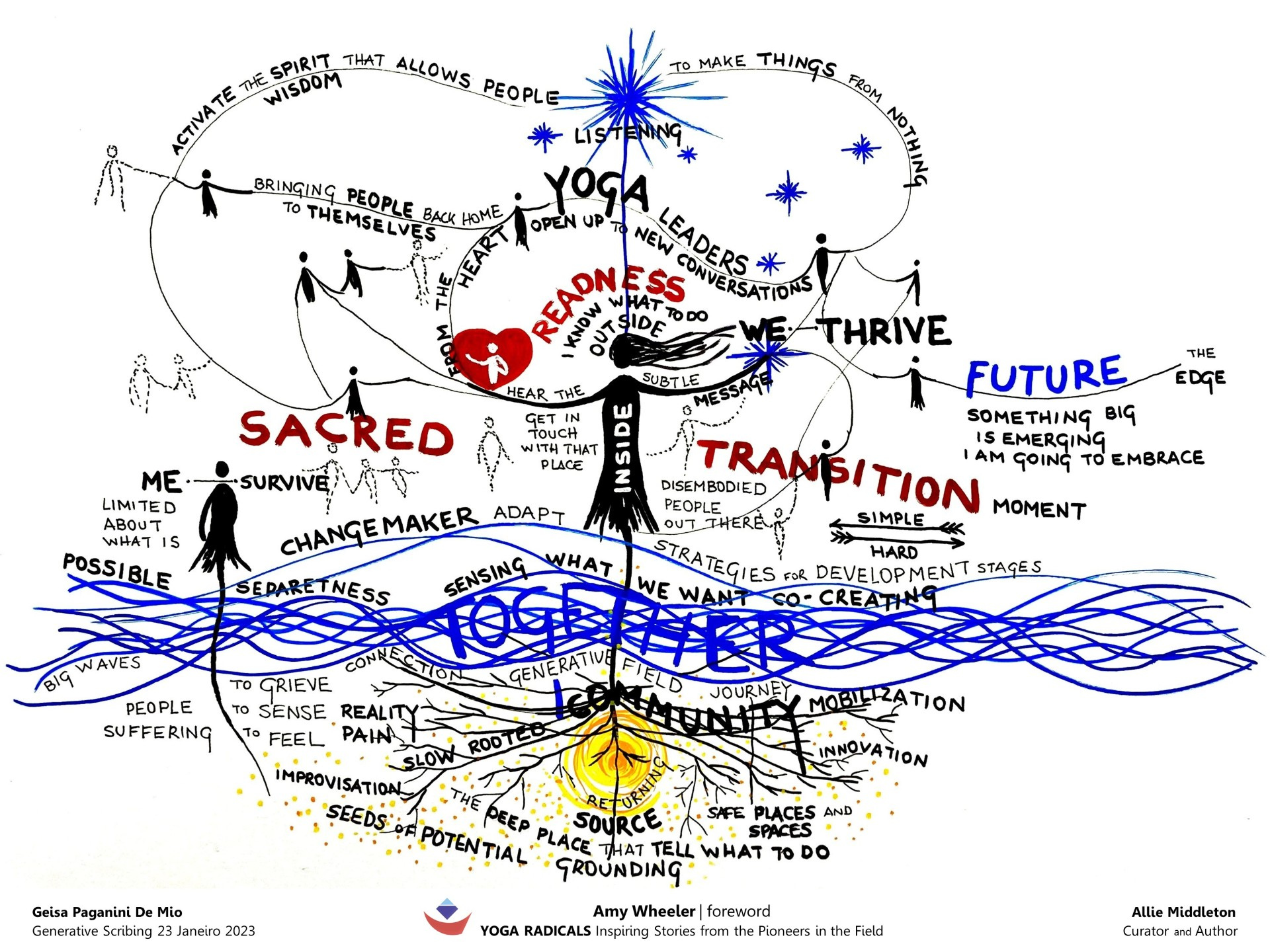
Over the following two years, Allie’s Brazilian colleague Geisa Paganini De Mio, a generative scribe trained in the Visual Presencing practice of the Presencing Institute, listened to all 36 hour-long interview recordings and created an individual scribing image for each contributor. These images were not illustrations. They were acts of deep listening, each one emerging from Geisa’s embodied, responsive attention to what was most alive in each conversation. The 36 images together form something unexpected: a visual map of how embodied practice moves from personal awareness into collective transformation.

A framework taking shape

From this body of work, including the interviews, images and five years of continued practice and teaching, a specific approach has been developing: Embodying Emergence. At it’s centre is the Wayfinder’s Octave: a framework that draw on the Theory U and Social Presencing Theatre, somatic yoga therapy, and the social arts, including generative scribing, embodied movement and collective resonance practices. This deepens understanding of how awareness moves into creativity and action in individuals, communities and the larger systems we are all a part of.
Continue reading

Moving in Liminal Spaces: Fascia, Story, and the Places that Shape Us

This blog post was written by Lauri Nemetz, MA, BC-DMT, LCAT, ERYT, IAYT and author of The Myofascial System in Form and Movement.

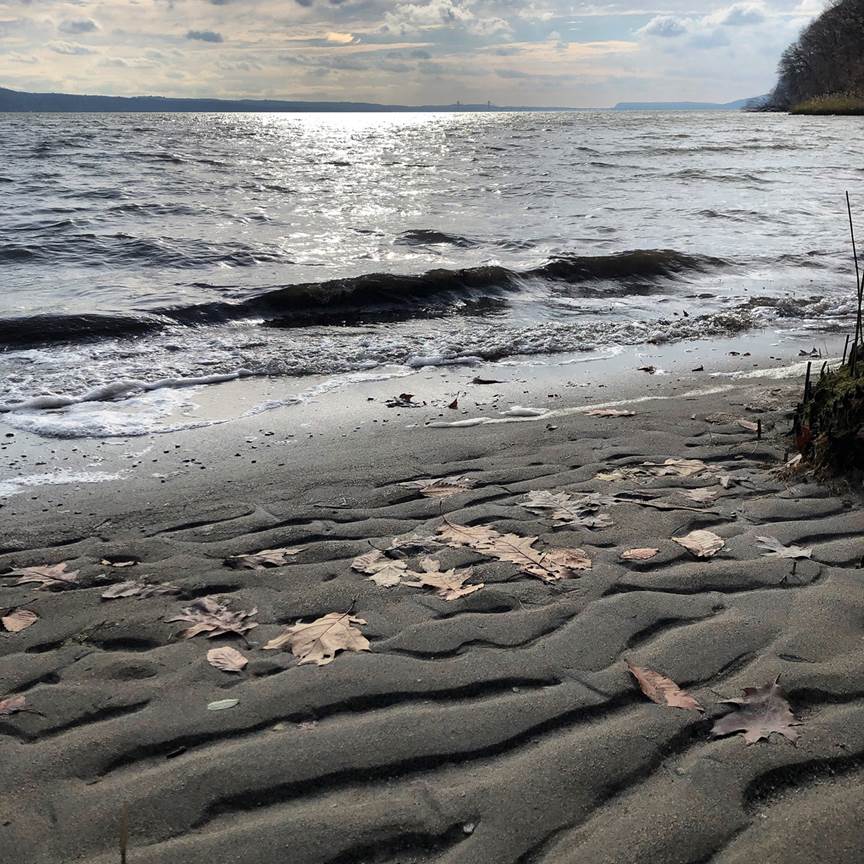
Photo by author

The outdoors is my sanctuary, a space not only to move but also to think. I spend a lot of time near (and sometimes on) the Hudson River in my home state of New York. Standing at the river’s edge, one can notice how two realities meet: sand with debris and the water lapping against the shore. Neither cancels the other out; instead one shapes the other. The sand holds the imprint of the Hudson’s tidal waters as they ebb and flow, and the water continually moves and changes against the coast. The meeting place is liminal, a threshold between two realities, where one fades and the other takes shape. It represents both/and.

Nature rarely fits neatly into human categories. Multiple realities can coexist simultaneously, and contradictory patterns can coexist without canceling each other out. Systems adapt precisely because they hold paradoxes like stability and change, order and randomness. Fascia’s capacity to be both stiff and fluid is a perfect example. The natural world is full of edges like the shoreline that is a changeable boundary and bridge, separation and unity all at once. To look closely at fascia is to confront a paradox.

Continue reading

What is IMPRINTING in Pilates?

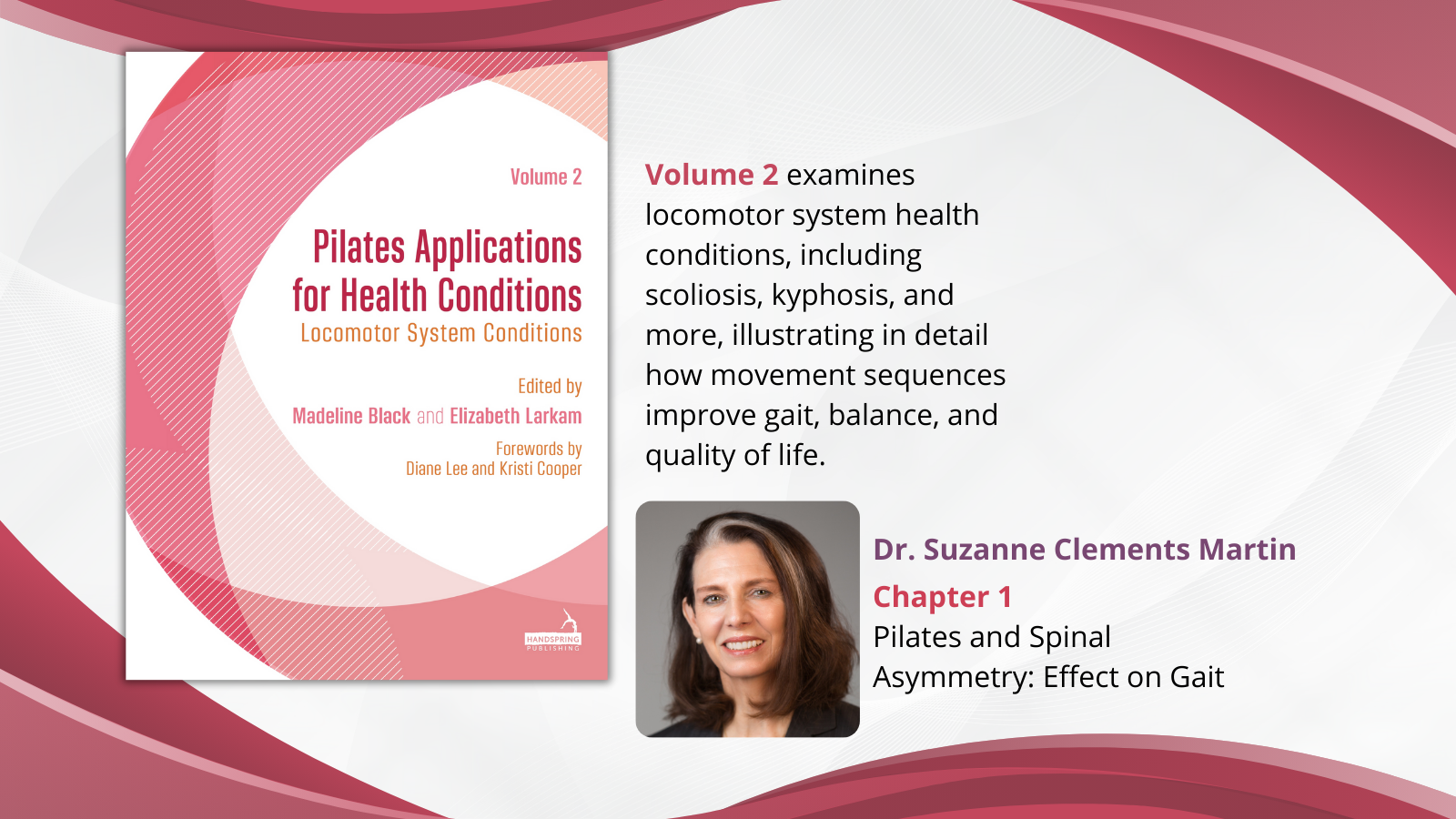
Image with text on the left side: "Volume 2 examines locomotor system health conditions, including scoliosis, kyphosis, and more, illustrating in detail how movement sequences improve gait, balance, and quality of life."
The text on the right side: "Dr. Suzanne Clements Martin | Chapter 1 
Pilates and Spinal Asymmetry: Effect on Gait"

This blog post was written by Dr. Suzanne Clements Martin, contributor to “Chapter 1: Pilates and Spinal Asymmetry: Effect on Gait” in Pilates Applications for Health Conditions Volume 2. This blog post originally appeared in Pilates Intel.

Imprinting is a beloved term used in Pilates

Attributed to our Elder Eve Gentry, imprinting is a subtle action involved with detailed movements of the vertebra in a supine position, where the imprinted motion seeks to “release” the individual vertebrae. In physical therapy terms, it would be called an anterior-posterior Grade 1 or 4 self-mobilization. Contemporary-minded Pilates allows liberty for interpretation. While mobilizing vertebral bones is one way of using the term imprinting, may I suggest others?

Fascia’s Importance

It is no secret that the fascia world concepts have inundated the field of Pilates, yoga, and exercise in general. How fortunate this age is to have new and exciting ways to look at not just fascial anatomy, but actual fascial movement, its connecting impact and coordination with the sensory and psychological self. Already being an advanced mover starting the journey over 25 years ago in cadaver studies, the glaring observation was how abundant the fascia was/is throughout a body, not just humans. Curiosity of fascia’s importance through observation of the outrageous amount of back-up tissue for infrastructure was immensely reassuring for my world, the mover population.

Thanks to interested surgeons, researchers, along with popular anatomists, a clearer, working knowledge of the structure, form, and function continues to emerge.

Continue reading

Pranayama – A Practice Lost in Translation

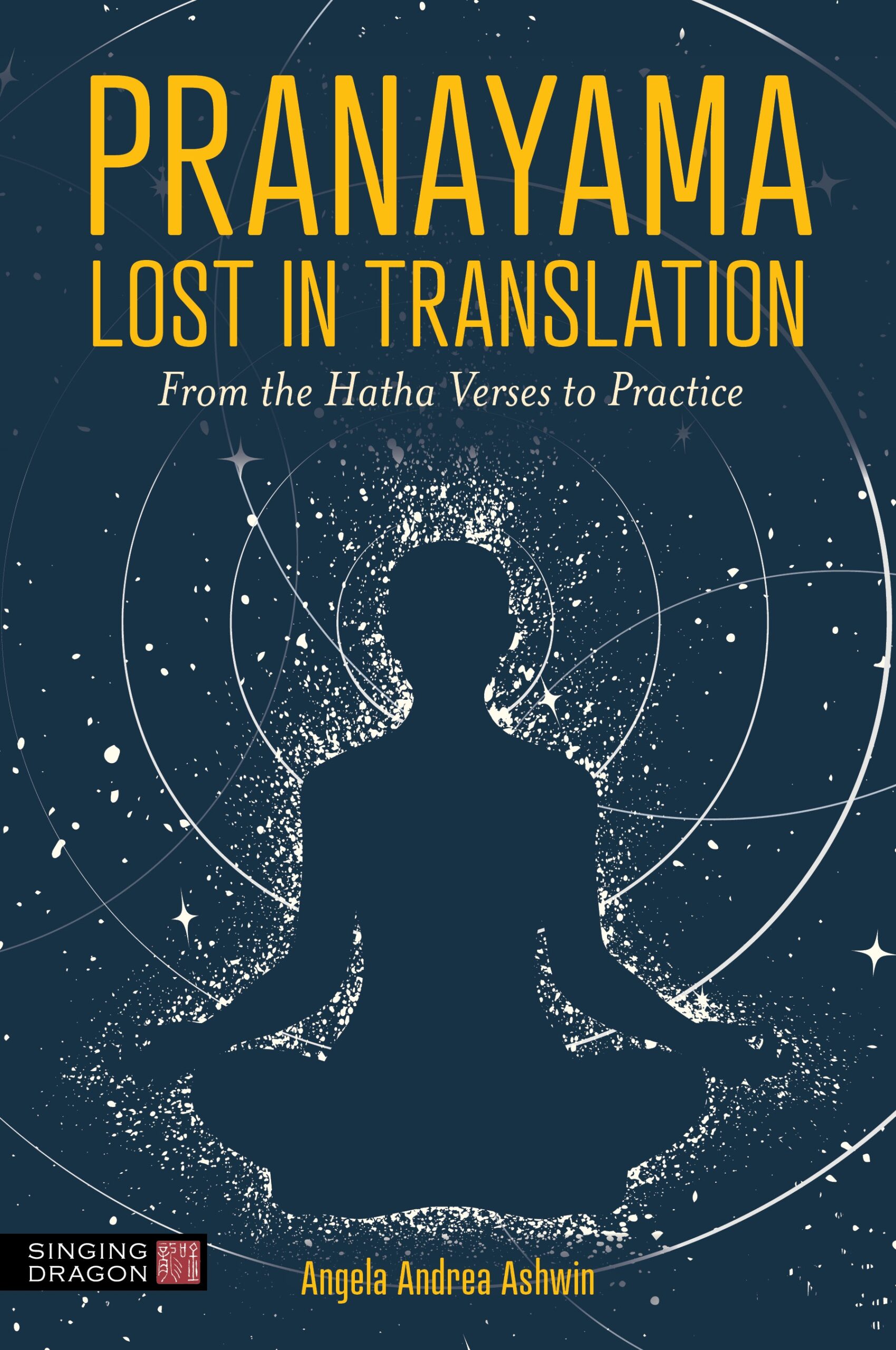
My book “Pranayama Lost in Translation” is my attempt to remind Yoga teachers and practitioners that Pranayama is not a respiratory practice with health benefits but “Prana” (Life) – “ayama” (expansion), unblocking the aliveness within and as such a deeply spiritual process, a process of a much subtler nature that takes place in the pranic, not physical body.

We humans are restricted in our comprehension of the truth, but it is in our nature to attempt to comprehend. Each culture chooses angles for exploration and each culture comes to different insights, all incomplete but all valuable. The way the West understands existence and the universe has its origins in ancient Greece, and has spread all over the world in the last centuries. It has unfortunately suppressed other ways and categorised many of them as false or superstitious. The Western way is one way, but there are many others and each way leads to realisations. They differ; none is right and none is wrong. The Western way uses analytic thought and observation via our five senses to gain deep insights concerning the material form. However, there is more than just the material form, which was of little interest for the Indian Yogis. Their focus was directed to the invisible, intangible, unthinkable realms. Indian Yoga set out to discover consciousness – Jnana Yoga -; the structure of mind and the methods of controlling it – Raja Yoga -; also the fluctuating, invisible, intangible process of life (Prana) – Hatha Yoga -. The West gained insight of details of the physical body that India never achieved, but could not formulate a concept of the phenomenon “Life” as it cannot be touched, cannot be seen or heard or measured and so is out of reach for Western methods. The West decided not to ask the question what “Life” is, but Life is, no question. India experienced Life by directly perceiving it with an undistracted focus. India observed Life, understood its nature, found methods to expand (ayama) it and gave the experience a name: “Prana”. What distinguishes a dead from an alive body? Something is missing, something has departed, something which entered at the beginning of life and its departure marks death. During a lifetime it is present, it is a phenomenon within all living beings, all have Life and this Life is neither ample nor too little, there is no need to replenish it. It exists in our inner body, the pranic body. However, this pranic body is blocked and Life cannot fully expand. The Yogis found methods to unblock the inner, pranic body to help Prana to expand into its full potential.

“The nadis are full of impurities…therefore practice pranayama daily to purify the nadis from impurities.” (Hatha Yoga Pradipika, 2, 4+6)

Continue reading

Rediscovering the true meaning of pranayama

Like for many of us, when I first came to yoga, pranayama was of secondary importance to asana. We were taught breathing techniques like the ‘complete yogic breath’ with reference to anatomy, which did not fascinate me very much, but it was only much later when I worked with the original Hatha verses, studied Sanskrit and delved deeper into pranayama practice, that I realized its fundamental role in Yoga and how mistaking it for ‘breath’ belittles its true purpose: to clear the obstacles in the pranic body to allow Prana (life force) to expand (ayama). My study and practice of Pranayama changed my teaching. I started to introduce my changed approach of Pranayama on CPD days for the British Wheel of Yoga and organized pranayama workshop in my Yoga School.  On those events I gave/give evidence from the Sanskrit texts and instruct the original teachings. Students were fascinated and I always finished a session with the question whether students think there might be truth in my approach. They confirmed that I had shown them my take in theory and practice and they saw its value. Thanks to those confirmations I wrote the book: “Pranayama Lost in Translation” which was straight away accepted by Singing Dragons Publishers and will appear in July 2025.

In the West we have been misled into believing that pranayama is respiration. Googling pranayama brings up ‘breathing exercises’ with multiple sites referring to  ‘respiratory health’ or ‘increased lung capacity’. But, that is not pranayama. Pranayama is the expansion of Prana (life force), which travels from the navel centre – the place pranic force resides – outward and returns back, a movement called vayu (wind). The vayu movement is linked to the breath as it shares the same rhythm as the respiratory process, but it is substantially different.

Continue reading

Learning to Feel Movement Thoroughly Is as Subtle as Learning to Taste Water

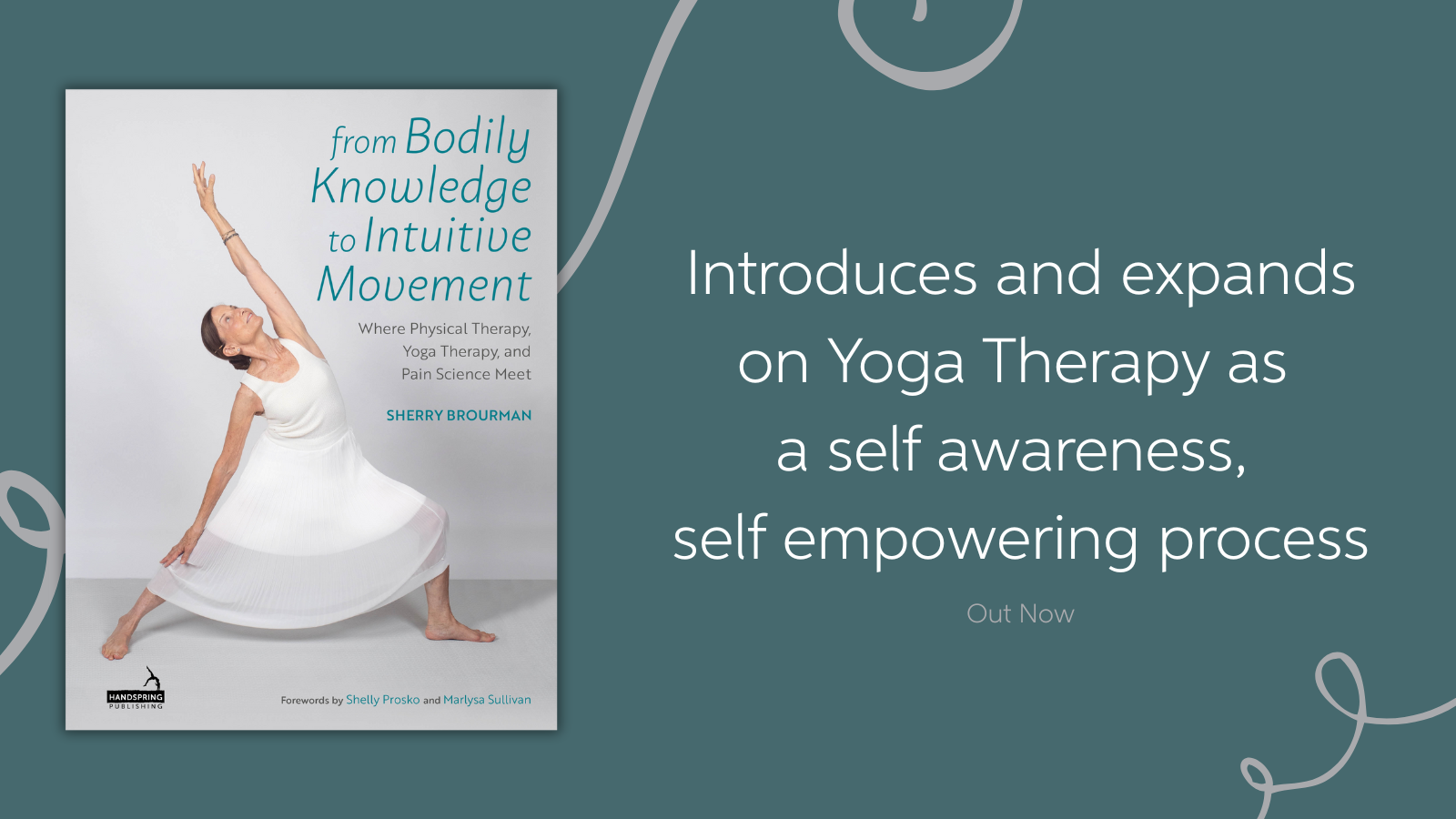
This blog post was written by Handspring author Sherry Brourman, author of From Bodily Knowledge to Intuitive Movement.

When it comes to sensing distinctions within our own movement, I believe natural human longing for safety coupled with our perfectionistic culture breeds a special self-conscious movement impatience. We’re compelled to know, to rush, to categorize, to perform—whether for others or ourselves—and all of this obstructs bodily presence and the self-awareness that comes with it.

Even the simple intention to shift into a calmer, slower gear—the state needed to take the time to truly feel movement can seem ambiguous or uncomfortably unfamiliar. Initially, just setting that intention may bring anxiety. This isn’t resistance to truth, a character flaw, or the absence of some innate ability that only some people have. Yet it appears and feels subtly defensive.

In over fifty years of observing, discussing, and guiding people toward greater movement sensitivity, I’ve come to believe that simple underexposure is the main barrier. Whether chemist or athlete, most people have had little experience with this kind of inner attention—and so we can grow shy, even to our own witness, much less someone else’s.


Continue reading

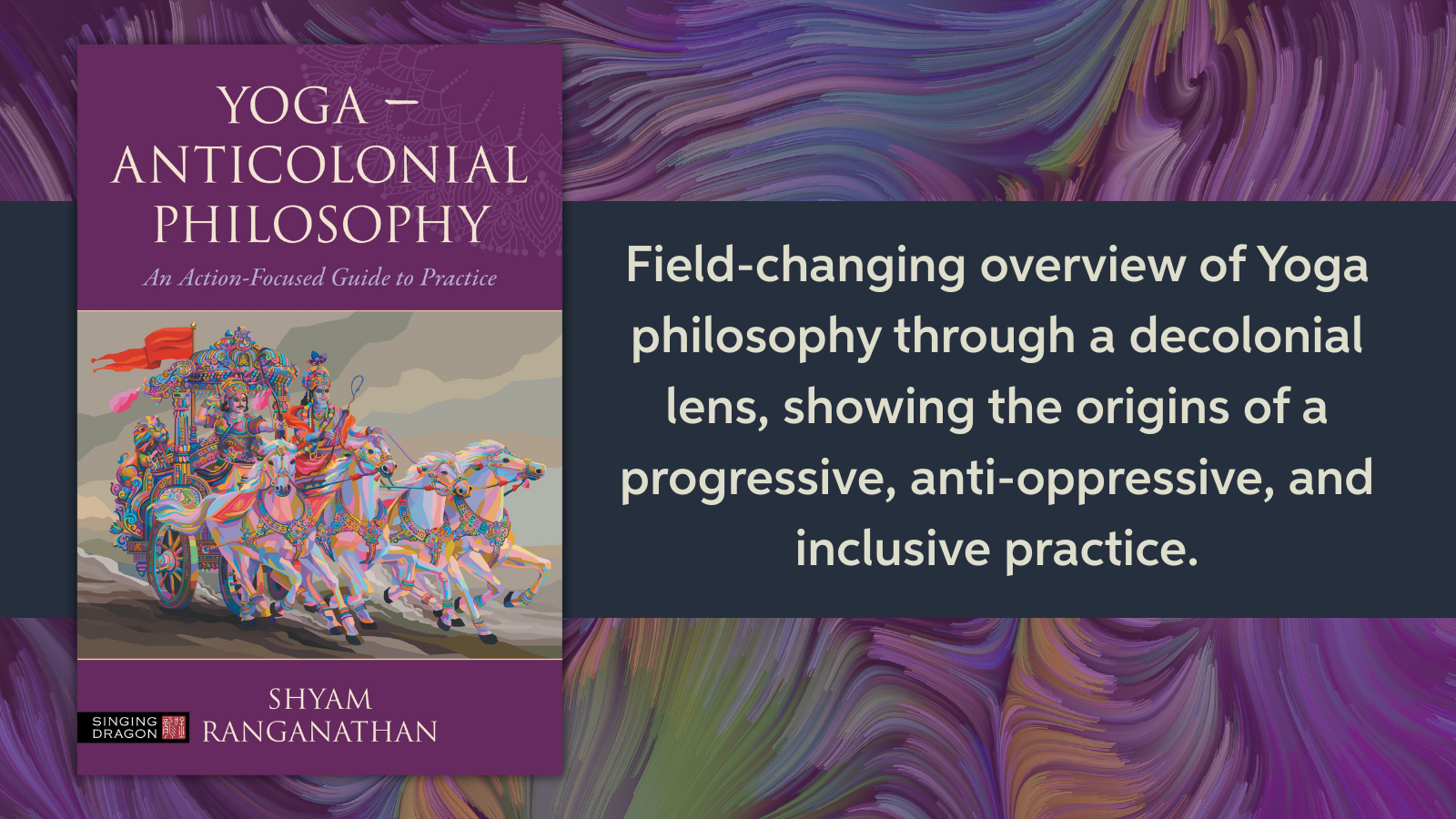
Yoga, the Original Anticolonial Philosophy, Solves Polycrisis

This blog post was written by Singing Dragon author Shyam Ranganathan, author of Yoga – Anticolonial Philosophy.

For those who have not been watching

Oppression, cruelty, and danger are surprisingly matters that anyone can ignore and be unaware of if they are not directly impacted. And even when it is on our doorstep, we can choose to be ignorant about such matters by creating ad hoc explanations that do not situate tragedy within larger historical trends.

Many of us for years have been concerned about the deterioration of the health of the environment and the remarkable systemic cruelty inflicted on nonhuman animals in ecosystems and factory farms, and we watched all of this in horror as most humans normalize this. This slow destruction of everything not human sets the backdrop for numerous painfully slow genocides and wars that have been occurring in spaces suffering from the legacy of colonization.

As a South Asianist, I was aware of the war against Tamil people in Sri Lanka, and the genocide of Rohingya people at the hands of the Myanmar state, both surprisingly (or perhaps not surprisingly) supported by local Buddhists! As I complete my second book on colonization, I’ve come to appreciate how normalized genocide has been in various theaters for centuries, including and especially North America.

According to scholarly reckoning, prior to European settlement in the Americas, Indigenous people on Turtle Island number in the 100 millions. Within three generations of European arrival, that population was down to 5% of its original number.

Many people in the Westernized world had become accustomed to a creation of Europe in the Middle East—Israel. October 7, 2023 changed that normalization with what Amnesty International and Human Rights Watch have concluded is an ongoing genocide against Palestinians—a claim that the International Court of Justice determined in 2024, is plausible.

There is a word for what we are going through: a polycrisis. Accordingly, there isn’t just one problem afoot. There are innumerable all at once, but they are not disconnected.

Continue reading

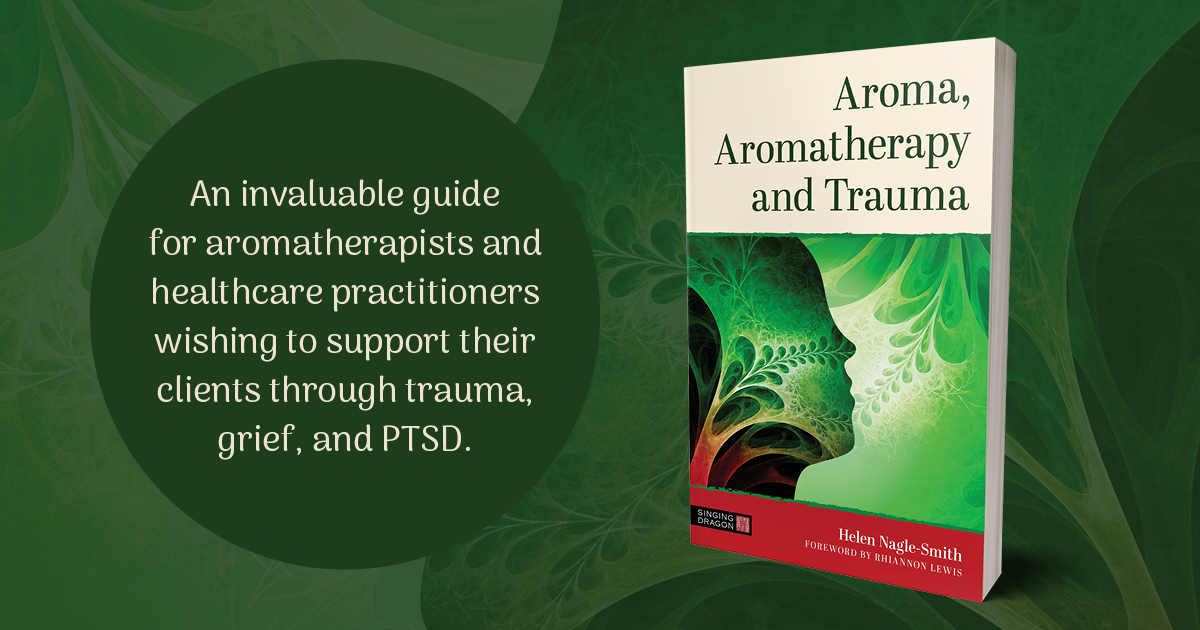
How Aroma and Aromatherapy Support Trauma Healing

Written by Helen Nagle-Smith, author of Aroma, Aromatherapy and Trauma and Working with Unusual Essential Oils.

How important is your sense of smell to you? As an aromatherapist, I really value my nose and the complex relationship between my sense of smell and brain. I understand that my olfactory bulb is closely linked to the parts of the brain that process emotions, memories and fears. In the millisecond we smell something we can have a negative or positive response. Inhaling the scent of a rose, takes me back to happy, sunny summer days as a child, playing in my garden with my sibling making rose perfume. 

Continue reading

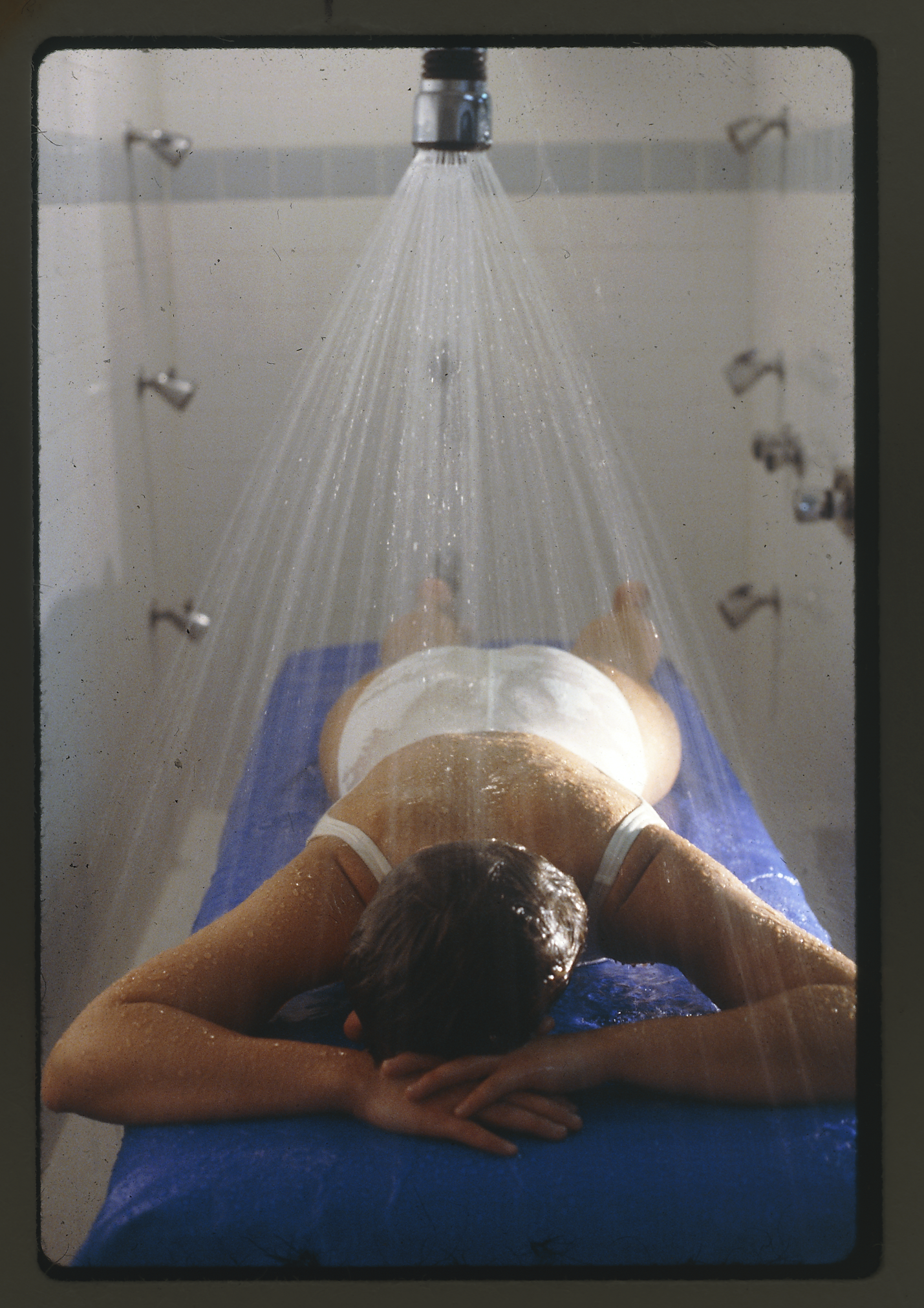
Using Humidity Awareness to Create a Healthy Office during Cold, Flu and COVID-19 season

This blog post is written by Marybetts Sinclair, LMT, author of Hydrotherapy for Bodyworkers

The seasonal cycle of respiratory viral diseases has been recognized for thousands of years, as annual epidemics of the common cold and influenza disease hit the human population like clockwork in the winter season. Studies have long shown the effect of temperature and humidity on viruses’ survival and transmission to others.” -Immunologist J. Moriyama

“When someone with COVID-19 coughs inside a room with dry air, virus particles stay in the air and remain on surfaces longer, and go deeper into the body, which increases the risk of contracting a virus and the severity of the infection.” Engineer David Baird

The viruses that cause colds, flu and COVID-19 will thrive this winter partly because cooler temperatures cause us to be indoors more. As we crank up the heat to warm our offices and homes, the indoor air dries out, affecting your entire respiratory system.  The upper part of your respiratory system, including your throat and nose, is lined with moist membranes that capture dirt, dust, viruses and bacteria before they reach your lungs. Proper humidity levels help these membranes do their job. But if your home or office air is very dry, moisture is drawn from these membranes as well as many other parts of the body, and even the fluid that hydrates your bronchial tubes can quickly evaporate, making it easier for harmful particles to get into the sensitive areas of your lungs. Cilia do not work as well in dry conditions either, making it more difficult for them to pass virus and debris out of the lungs.

Signs you are breathing too much dry air include a scratchy sore throat that lasts for days, cracked lips, fingertips or heels, bloody noses, itching or flaking skin, chapped lips, even a feeling of tightness around joints. If you or one of your clients is contagious with a flu, cold, or COVID, even before that person even knows they are sick, dry air may help transmit it to the other person.

Continue reading

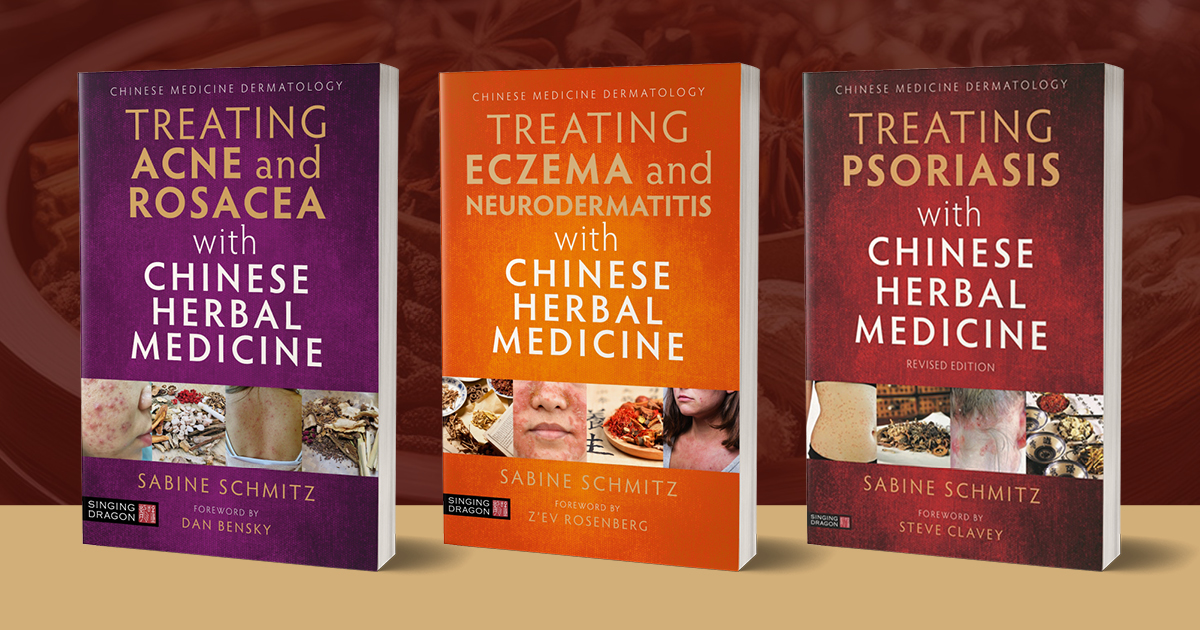
Treating Eczema and Neurodermatitis with Chinese Herbal Medicine

Ahead of the publication of her newest book, Sabine Schmitz, talks about why she wrote the newest book and what you the role of Chinese herbal medicine in dermatology.

What inspired you to write a book about treating eczema and neurodermatitis with Chinese herbal medicine?

That’s an easy one to answer: During my TCM studies in China, I had quite a hard time finding English literature on Chinese dermatology that covered the various specialized topics. This was especially challenging since I needed to write my Master’s thesis on psoriasis. As a Westerner, I spent hours, even days, searching for books and reading literature that often wasn’t specific enough and repetitive. That’s how the idea to write a handbook series on TCM dermatology came about, to fill this gap in the literature. And let’s be honest, a medical tradition with over 2,500 years of experience should have appropriate publications on these topics. In Western medicine, there are numerous specialized books for each medical field—a tradition I wished for in TCM as well. This is crucial to making knowledge accessible to many therapists and laying the foundation for specialization.

Continue reading