Moving in Liminal Spaces: Fascia, Story, and the Places that Shape Us

This blog post was written by Lauri Nemetz, MA, BC-DMT, LCAT, ERYT, IAYT and author of The Myofascial System in Form and Movement.

Photo by author

The outdoors is my sanctuary, a space not only to move but also to think. I spend a lot of time near (and sometimes on) the Hudson River in my home state of New York. Standing at the river’s edge, one can notice how two realities meet: sand with debris and the water lapping against the shore. Neither cancels the other out; instead one shapes the other. The sand holds the imprint of the Hudson’s tidal waters as they ebb and flow, and the water continually moves and changes against the coast. The meeting place is liminal, a threshold between two realities, where one fades and the other takes shape. It represents both/and.

Nature rarely fits neatly into human categories. Multiple realities can coexist simultaneously, and contradictory patterns can coexist without canceling each other out. Systems adapt precisely because they hold paradoxes like stability and change, order and randomness. Fascia’s capacity to be both stiff and fluid is a perfect example. The natural world is full of edges like the shoreline that is a changeable boundary and bridge, separation and unity all at once. To look closely at fascia is to confront a paradox.

Continue reading
Silk-reeling exercises for the upper body

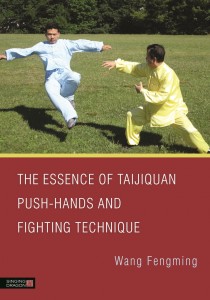
Fengming_Essence-of-Taij_978-1-84819-245-4_colourjpg-webThis extract from The Essence of Taijiquan Push-Hands and Fighting Technique by Wang Fengming features unique silk-reeling exercises from Chen-style Taijiquan. This coprehensive training manual has never been available in English before and the practices are traditionally shrouded in secrecy.

Read the extract…

In The Essence of Taijiquan Push-Hands and Fighting Technique Master Wang Fengming, an eleventh generation practitioner of Chen-style Taijiquan, provides detailed information about the famous internal fighting techniques and reveals inside knowledge essential to the remarkable results achieved by the Chinese masters. The book features:

  • effective ways of cultivating Taiji internal power
  • variety of joint-locking techniques and counter techniques
  • 13 postures of Taiji explained
  • leg work, including stances and kicking techniques
  • unique silk-reeling exercises
  • rarely revealed vital point striking
  • 7 styles of push-hands training
  • 20 kinds of Taiji energy explained and demonstrated.

This comprehensive book is a major contribution to the literature on push-hands techniques in the West and is available from the Singing Dragon website.